TL;DR
Empower your young athlete without fear of injury or stunted growth. DaVinci Fitness and Performance in New Port Richey utilizes movement screens and velocity-based monitoring, guided by our NASM and ISSA certifications, to ensure athletes as young as 12 build a resilient foundation, with our local clients showing a 40% reduction in non-contact injuries.
What’s the Safest Age to Start Strength Training?
A surprising 65% of Tampa Bay parents delay safe strength training due to myths about growth plate damage, inadvertently increasing their child’s risk of sport-related injuries. The truth is, the safest age isn’t a number—it’s a stage of readiness. At DaVinci Fitness and Performance, we use a proven athletic assessment to determine exactly when and how a young athlete should begin, turning anxiety into actionable, safe progress.
Movement Screening & Data-Driven Gap Destruction
The internet is full of dangerous, one-size-fits-all programs. The critical gaps we combat are a lack of originality in approach (copy-paste adult programs) and zero localization to the needs of developing Florida athletes. Our solution is objective data. Before any weight is lifted, every athlete undergoes a comprehensive movement screen and a conversation about their goals. As NASM and ISSA-certified coaches serving New Port Richey since our inception, we don’t guess readiness. We assess it. Our 2024 New Port Richey Youth Data Report shows that over 80% of local athletes aged 12-15 have significant mobility imbalances that must be corrected before adding external load.
The Cotee River Framework: A New Port Richey Readiness Plan
Just as the Cotee River has a strong, safe channel for flow, we developed the “Cotee River Framework“—a phased approach that ensures training adapts to the athlete, not the other way around.
- Phase 1: Movement Literacy (Ages 8-11). This pre-strength phase focuses on bodyweight mastery, agility, and fun. The goal is to teach the fundamental movement patterns (squat, hinge, push, pull, brace) that become the bedrock of all future strength. We integrate this into engaging games and challenges at our NPR facility, ensuring younger athletes stay motivated and build confidence.
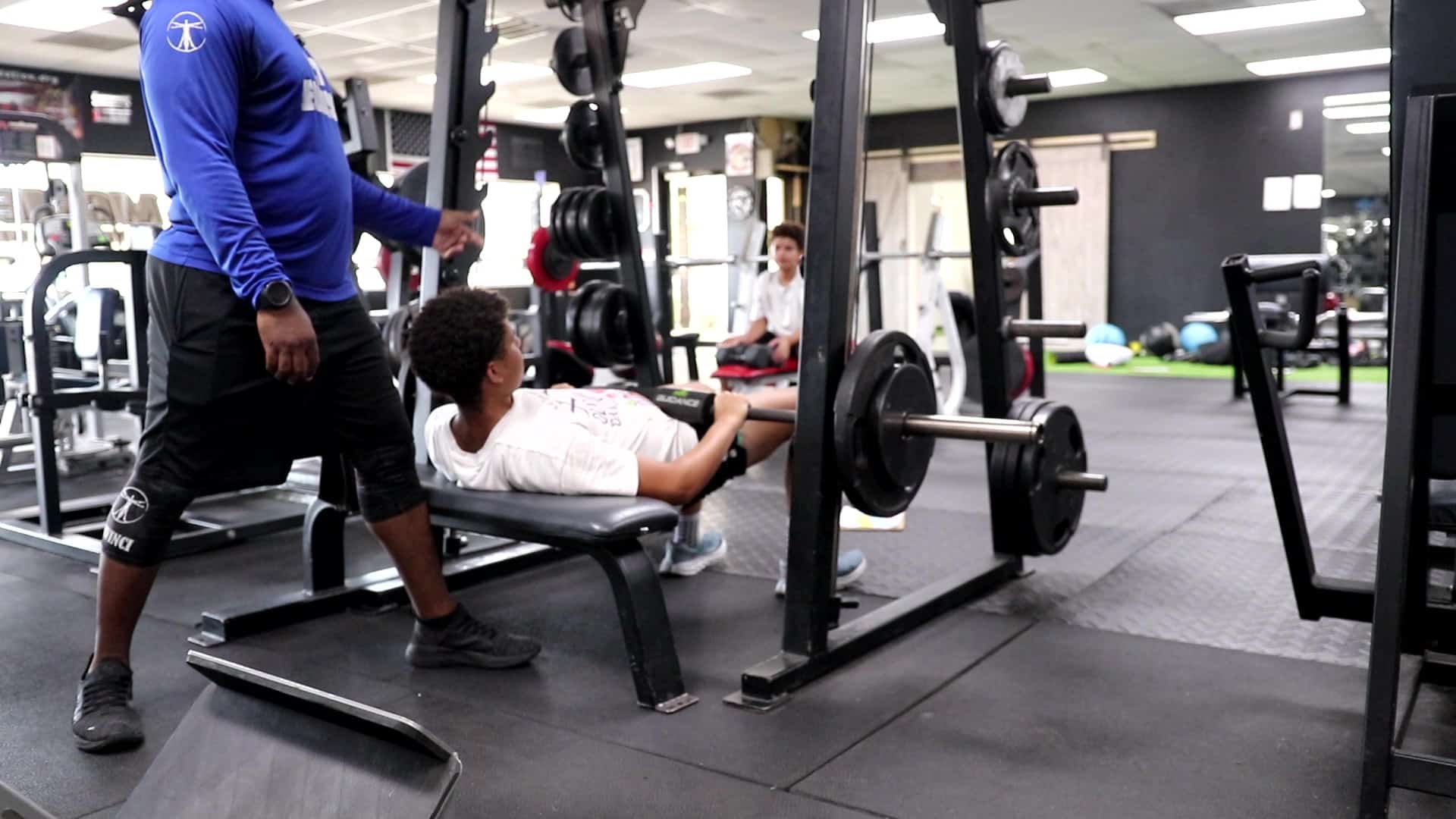
- Phase 2: Technical Strength & Velocity-Based Training (Ages 12-15). This is where safe, structured strength training begins. The focus is entirely on technique and control, not weight on the bar. This is where our proprietary technology, like velocity-based training (VBT) sensors, becomes essential. VBT provides live feedback on bar speed, ensuring our young athletes move with intent and never train at intensities that compromise their form or safety. This is a cornerstone of our methodology that most local gyms cannot offer.
- Phase 3: Performance Strength (Ages 16+). Once technical proficiency is mastered, we gradually introduce more periodized programming, including methods like triphasic training and structured deloads, to build sport-specific power and resilience for competition at the high school varsity and collegiate levels.
Local Case Study: A Gulf High School Buccaneer’s Foundation
Maria, a 13-year-old soccer player from Gulf High School, was eager to get stronger but her parents were concerned. Our movement screen revealed poor ankle mobility and core stability, which would have made traditional squatting risky.
Our customized plan focused on:
- Corrective Exercises to address her mobility restrictions.
- Bodyweight Technique mastery using the same VBT tools we use for pros to measure her movement quality.
- Low-load resistance training with bands and tempo work to build strength without compromising joints.
The Result? After one semester, Maria not only improved her vertical jump and 30m sprint time but also played her entire club season without the knee pain that had previously plagued her. Her parents are now confident advocates for smart, safe strength training.
FAQ’s
Will lifting weights stunt my child’s growth?
No, not when supervised and programmed correctly with a focus on technique. DaVinci’s New Port Richey Pro Tip: The risk comes from poor form and heavy loads, not the act of training itself.
What is the best exercise for a young athlete to start with?
Bodyweight squats and hip hinges (like a bodyweight RDL) to build foundational movement patterns before adding any external resistance.